Last updated: November 05, 2026
Key Takeaways
- Keep the pet out of the work zone and block the moving object’s path before the hazard starts.
- Put the puppy or kitten behind a closed barrier and guide the door with one hand and one eye on the floor.
- Anchor tall furniture, close drawers, and remove climbable access while the room is in use.
- Shut doors and latches fully, and leave no paw-sized gap.
A moving door, dresser, or bookshelf can pinch a curious puppy or kitten, and the safest fix is to control the motion before the pet gets near it. This article is about how to keep a curious puppy or kitten safe around moving doors and furniture, especially when everyday home changes create pinch, tip, and crush risks.
The fastest way to lower the risk right now
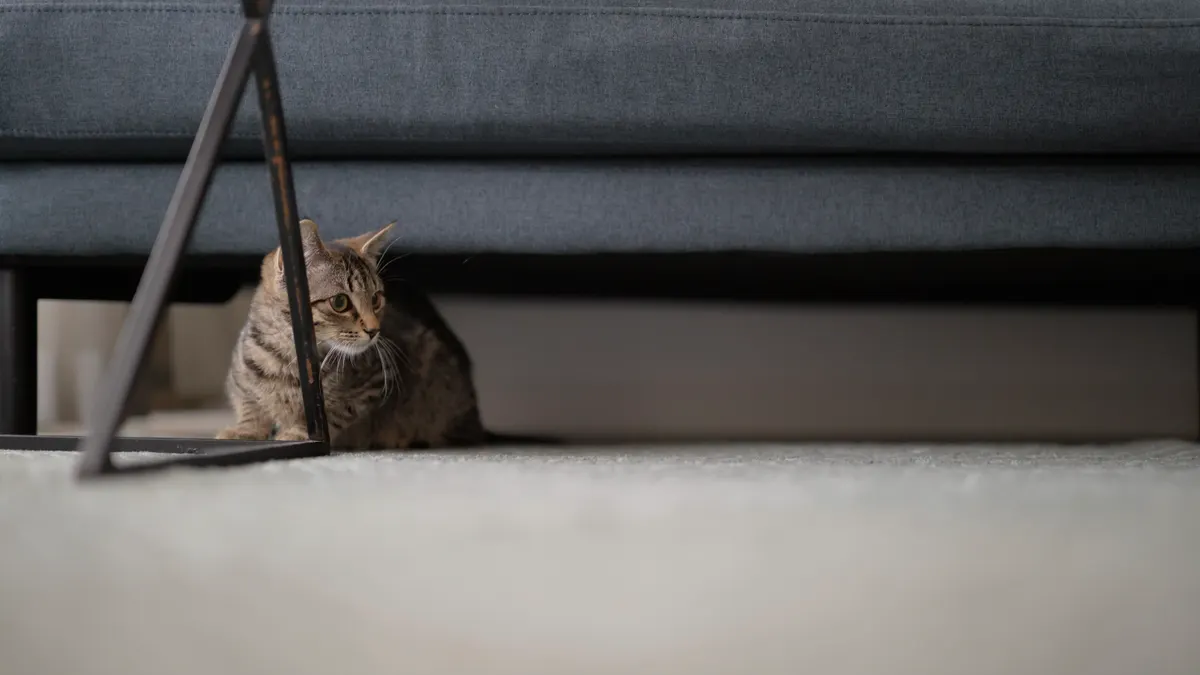
The fastest way to reduce danger is to stop unsupervised access during the move and block the path of the object itself. A puppy or kitten does not need a big room to get hurt; a 1-inch gap at a closing door, a half-open drawer, or a wobbly dresser edge can create a trap.
Start with the situation that is changing: a door opening and closing, a dresser being slid, a bookshelf being shifted, or a drawer being pulled out. Those are the moments when a pet’s curiosity becomes a hazard. A baby gate at the doorway, a closed crate in another room, or a shut room door keeps the animal out of the work zone while the object is moving. If the pet has to stay nearby, keep one adult assigned to the animal instead of splitting attention.
Do not rely on voice commands alone. A kitten can slip under a bed frame in a second; a puppy can dart toward a swinging closet door before anyone finishes saying “no.” Physical barriers matter more than verbal correction. A standard pressure-mounted baby gate works well for doorway control when the goal is short-term blocking, but it should not be used as the only defense against a heavy piece of furniture tipping.
This page fits into the larger home hazard prevention for pets guide, but the focus here is narrower: keep the moving object from meeting the pet in the first place. If that sounds blunt, it should. Once a door or dresser starts moving, the time to react is already late.
How do I keep a puppy or kitten away from a moving door?
Keep the pet on the far side of a closed barrier and control the swing of the door with one hand on the handle and one eye on the floor. Door injuries usually happen at hinges, latches, thresholds, and the narrow wedge of space that appears as the door closes. That wedge is where paws, tails, whiskers, and heads get caught.
Use this order every time a door may move while the pet is loose:
- Move the pet first. Put the puppy or kitten behind a closed interior door, behind a baby gate, or in a crate for 5 to 15 minutes. The result should be no access to the doorway at all.
- Check both sides of the door. Look at the floor, the hinges, and the gap at the latch side before you move it. The result should be a clear path with no tail or paw in the swing area.
- Open or close slowly. Move the door by hand, not with your foot or a sudden pull. The result should be a controlled swing with no slam.
- Keep fingers and pet limbs away from the edge. A door edge can pinch even if it does not fully close. The result should be space between the moving panel and anything living.
- Use a stop or latch if the door tends to drift. A rubber doorstop or wedge keeps a door from swinging shut on its own. The result should be a stable, fixed position during cleanup or unloading.
- Do a floor sweep before you release the pet. The result should be a cleared threshold and no dropped hardware, screws, or packing straps near the doorway.
A common mistake is letting a pet “just stay out of the way.” That costs seconds, and seconds are all a kitten needs to squeeze through a closing gap. Another mistake is propping the door partly open and assuming that is safe. A half-open door is often worse than a fully closed one because it invites the animal into the danger zone.
For closet doors, pocket doors, and bathroom doors, the rule is the same: if the door is moving, the pet is elsewhere. A standard latch or stop is cheap protection compared with a vet visit after a pinched limb.
How do I stop furniture from tipping when a pet climbs it?
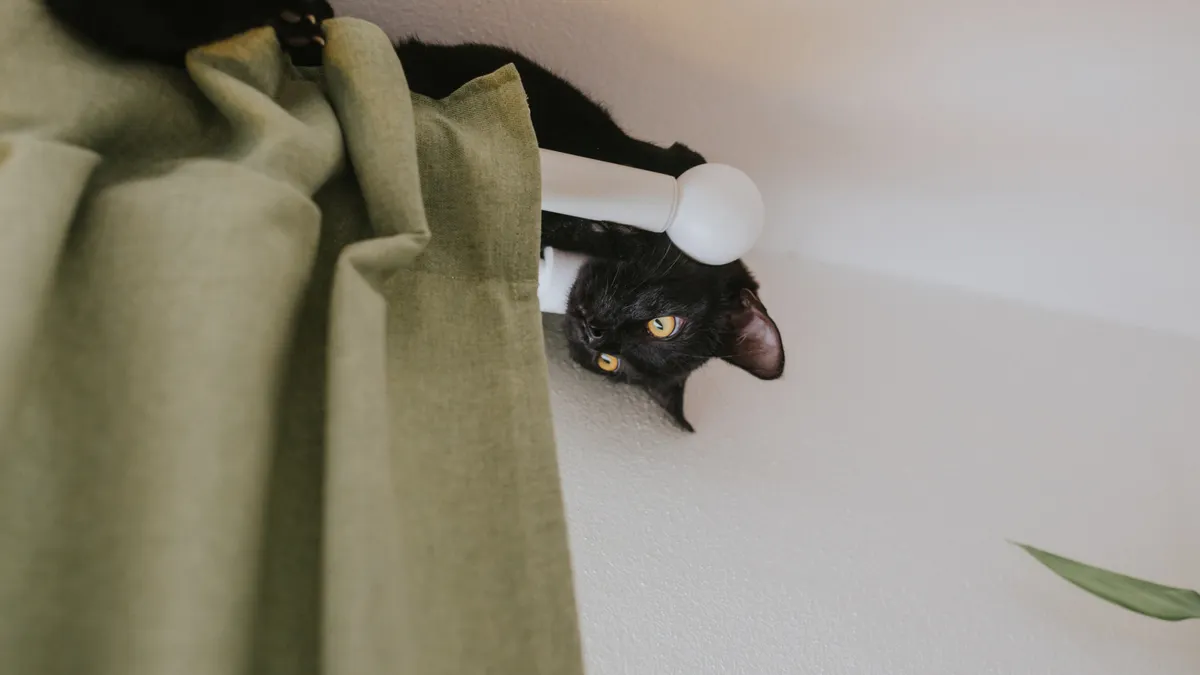
Stop furniture from tipping by anchoring tall pieces to the wall, removing climbing access, and keeping drawers closed whenever the room is in use. A puppy that jumps against a dresser and a kitten that scales a bookshelf can turn a stable-looking item into a crush hazard fast, especially if the furniture is top-heavy.
Anchoring is the main fix for tall furniture. Use furniture anti-tip straps or brackets made for the wall material in the room. A dresser, bookshelf, or storage cabinet should not be left free-standing if a pet can pull on an open drawer or climb the shelves. That is especially true for lightweight bookcases, which often have a narrow base and a tall profile.
Keep drawers fully shut. An open drawer becomes a step, then a lever. One partial drawer can shift the center of gravity enough for a small child or a pet to put the unit at risk. If a dresser must stay in the room while you sort clothes or linens, open only one drawer at a time and close it before walking away.
Skip the “temporary” perch idea. A cat bed on top of a bookshelf or a blanket on a dresser can encourage climbing, and a puppy will often copy the route the kitten takes. If a surface is not meant for climbing, remove the invitation. This is one place where a baby gate may help indirectly: gate off the room while the furniture is being rearranged, then reopen it only after the anchors are set.
A useful rule is this: if the piece is taller than it is deep, treat it as tip-prone until it is anchored, and consult a qualified installer or other professional if you are unsure about the wall, hardware, or load. That is not fearmongering; it is basic physics. If you cannot anchor it today, move the pet out of the room until you can. A temporary workaround is not a safety plan.
What should I do with drawers, closet doors, and half-open spaces?
Close them, lock them if they can swing, and do not leave a gap that a paw can enter. Drawers and closet doors create their own set of pinch points because they move in straight lines and trap little legs or tails against a frame.
A drawer left open 2 or 3 inches is not harmless. A kitten can wedge into the opening and get caught as someone pushes it shut. A puppy can bite the handle, hang on, or use the lower drawer as a step. The fix is simple: close drawers fully after every use, and if a room is being actively worked in, check the furniture every few minutes rather than at the end of the task.
For closet doors, keep the track clear and avoid a swinging door that can slam back unexpectedly. Sliding closet doors can be just as dangerous as hinged ones if a paw is in the track. Shut the door completely or keep the pet out of the room while the closet is open. If the closet is part of the work area, use a baby gate at the room entrance so the animal cannot investigate loose hangers, bags, or moving panels.
Half-open spaces under furniture matter too. A pet that crawls under a bed, behind a recliner, or between a wall and a dresser can be trapped when the item shifts. Before moving anything, do a hand check of the underside and back edge. That means getting down low enough to see the floor line, not just glancing from standing height.
This is where people often get careless because the job feels small. One drawer, one closet, one quick adjustment. That is the exact setup for a pinched paw. Keep a habit of closing the thing you opened before moving to the next task.
How can I move a dresser or bookshelf without risking a crush injury?
Move a dresser or bookshelf only after the pet is contained, the path is clear, and the piece is light enough for controlled handling by the people involved. The main risk is not the move itself; it is the moment when the furniture shifts, tilts, or gets set down near an animal.
Use this procedure:
- Remove the pet from the room. Put the puppy or kitten behind a closed door or baby gate for the full move. The result should be zero animal traffic in the room.
- Empty the piece first. Take out books, clothes, boxes, and loose items. A lighter dresser is less likely to tip and less likely to drop contents if it jolts.
- Measure the route. Check hallway width, door swing, and stair clearance before you begin. The result should be a path with no forced turning.
- Use furniture sliders or a dolly when needed. These tools can reduce dragging and sudden drops on hard floors or carpet.
- Keep one person watching the floor. The spotter looks for paws, tails, cords, and corners while the movers handle the weight.
- Set the piece down before releasing the pet. The result should be a stable, still object in its final position.
Do not push a dresser with a pet “somewhere nearby.” The animal can reappear at the worst possible angle, especially if the room is noisy or the move involves a blanket, cardboard, or a box. If a bookshelf has to be moved only a few feet, that is still enough distance to crush a paw if it slips. Treat every move as a full lift-and-set task, even when it feels brief.
A practical limitation: if the furniture is too heavy to control without strain, do not improvise with the pet in the room. That is the wrong setup for a quick move. Wait until the animal is elsewhere, or bring in help.
Which rooms and routines need the strictest supervision?
The rooms that need the tightest supervision are the ones with swinging doors, tall furniture, and active rearranging: bedrooms, closets, hallways, and any room where a dresser or bookshelf is being moved. The supervision standard should be simple: if the object is in motion, the pet is not in that room.
Puppies need supervision because they rush toward motion. Kittens need supervision because they fit into spaces adults forget to check. Both are drawn to the sound of drawers sliding and doors opening. That means the danger rises during routine tasks such as making a bed, cleaning under furniture, or bringing laundry in and out.
Use a short-duration confinement plan when you need hands free. Five minutes is often enough for a single drawer project; 10 to 15 minutes is more realistic for moving a bookcase or setting up a baby gate. The exact time matters less than the rule: the pet stays contained until the room is static again. If you are working in a larger area, move the animal to a completely separate room rather than trying to “watch them from across the hall.”
Supervision also means watching for re-entry. A pet may be quiet for a minute and then dart back as soon as a door opens. That is why the barrier should stay closed until the final object is in place. If one adult is handling furniture and another is available, the second person should watch the pet, not the tool or the box.
This is the point where I would say the method is not for people who want the pet to roam freely during a move and still be safe. Those two goals conflict. The safer choice is temporary restriction, even if it makes the job feel slower.
When a baby gate helps — and when it does not
A baby gate helps when the goal is to block access to a room, not to stop a heavy object from falling. That distinction matters. A gate is good for keeping a puppy or kitten out of the doorway while a door swings, while a dresser is being shifted, or while drawers are open. It is not a wall. It will not protect a pet if a bookshelf tips toward it.
Use a gate at the room entrance when you need a visible barrier for 10 minutes or more. Pressure-mounted gates are common for quick use, but they are best for access control, not load-bearing protection. A hardware-mounted gate is more secure if the pet is large or persistent. If you are moving furniture through the doorway, remove the gate temporarily so the furniture does not strike it and create a new hazard.
The trade-off is speed versus safety. Leaving a gate in place slows the move and can make the pathway cramped. Taking it down may make the room easier to use, but it removes your pet barrier. The correct choice depends on what is happening in the room right then. If the furniture is not moving through that door, keep the gate up. If it is, move the pet somewhere else first.
For a broader safety plan, this hazard fits under the site’s home hazard prevention for pets guidance. Here, the rule stays narrow: use the gate to manage access, not as a substitute for anchoring furniture or controlling doors.
How do I stop a pet from getting pinned by furniture?
Keep the pet out of the room while any heavy piece is moving, and anchor tall furniture before you let the animal back in. A dresser, bookshelf, or cabinet can tip if a drawer is open or a pet climbs it. If you cannot anchor the furniture right away, close the room with a baby gate or door until the risk is gone.
Are closet doors a pet hazard?
Yes, closet doors are a hazard when they swing, slide, or leave a gap that can trap a paw or tail. A kitten can slip into a track opening, and a puppy can dart through a partly open closet before the door closes. Keep the door fully shut or keep the pet out of the room during use.
What rooms are safest while moving furniture?
The safest room is the one with no moving furniture and no open doorway to the work area. That usually means a closed bedroom, bathroom, or laundry room with the pet behind a solid barrier and no access to the hall. The key is not the room label but whether a dresser, bookshelf, or door is still in motion.
Drafted with AI; not yet reviewed by a person.