Last updated: November 05, 2026
Key Takeaways
- Stop bleeding first with steady pressure and keep the pet still.
- Firm, continuous pressure with gauze or a clean cloth is the first step.
- A paw wrap should protect the wound, not squeeze circulation.
- If bleeding still goes on after 10 minutes of firm pressure, get veterinary help.
A bleeding pet wound needs direct pressure right away. If your dog or cat is spurting blood, soaking through cloth in minutes, or won’t let you get near the wound, What to Do If Your Dog or Cat Is Bleeding or Has a Wound is to slow the bleeding, keep the animal still, and get to a vet without wasting time on cleaning or checking every detail first.
What to do in the first 60 seconds
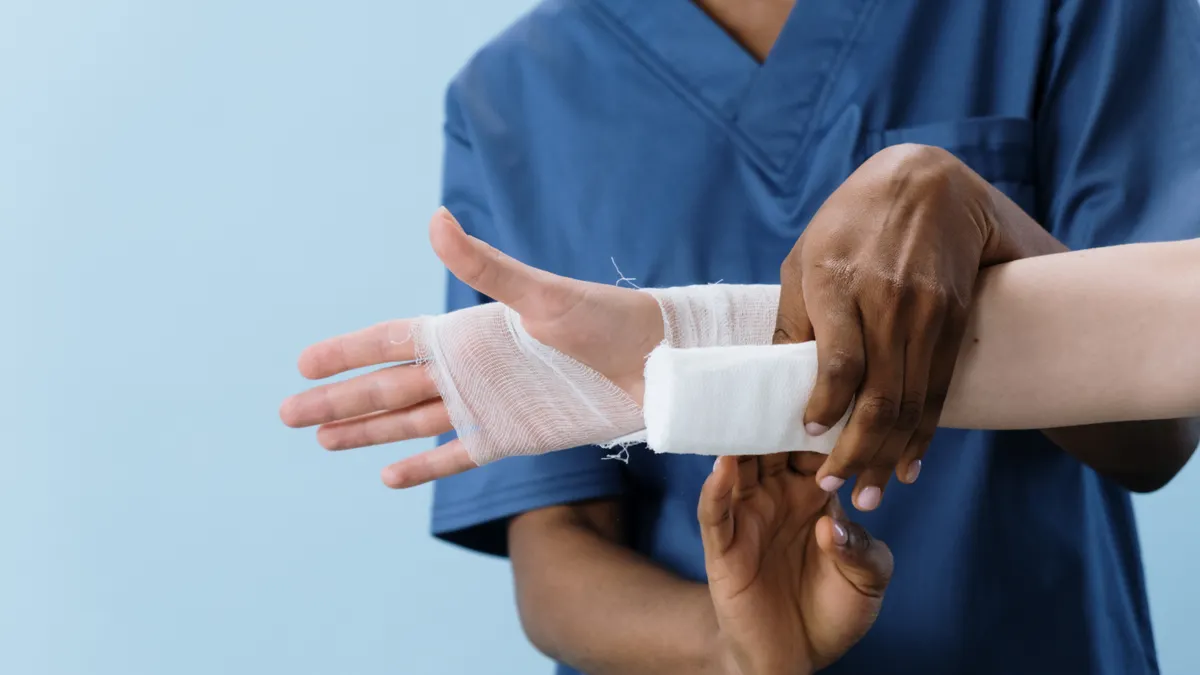
Therefore, stop the blood flow first, not the dirt. That is the order that matters when a dog or cat is actively bleeding, because a wound that keeps bleeding can become dangerous fast even if it looks small at the skin.
- Keep the pet still and quiet. Put the animal on the floor, a bed, or another low surface. Limit movement to 1 room if you can. Movement pumps blood and pulls clots apart.
- Press a clean cloth or gauze directly on the wound. Use a folded clean cloth, sterile gauze, or the cleanest fabric you have. Press firmly with both hands for 5 to 10 minutes without peeking. The clot needs uninterrupted pressure to form.
- Add more layers if blood soaks through. Do not lift the first cloth. Put another cloth or more gauze on top and keep pressing. Pulling off the first layer often tears the clot and restarts bleeding.
- Hold steady pressure while you prepare to leave. Keep pressure on until transport. If the wound is on a leg or paw, a helper can keep pressure while you get the carrier or car ready.
- Decide on a vet trip quickly. If blood is still flowing after 10 minutes of firm pressure, if the wound is deep, or if the pet seems weak or panicked, go to a veterinarian immediately.
A tiny amount of oozing after pressure can happen. Steady bleeding that pools, runs, or fills cloth is different. The pet may need a vet unless bleeding clearly slows and stays controlled.
How do I stop a pet from bleeding?
You stop a pet from bleeding by applying firm, continuous pressure with gauze or a clean cloth and by preventing the animal from moving. A muzzle may be needed for a frightened dog that might bite, and a carrier can be a safe way to move a cat.
Use the simplest method that actually holds pressure:
- Gauze: Best if the wound is small and you want the cloth to stay put.
- Clean cloth: Fine when gauze is not available. A T-shirt, towel, or washcloth works in a pinch.
- Hand pressure: More effective than loose wrapping in the first few minutes.
- Muzzle: Useful for dogs in pain, but never muzzle a dog that is vomiting, having trouble breathing, or too weak to swallow normally.
- Carrier: Good for cats and for small dogs that can be carried without jostling the wound.
The common mistake is checking the wound every minute. Each check breaks the forming clot. If the cloth becomes soaked, add another layer on top and keep pressing. If the bleeding is from a nose, mouth, or ear, direct pressure may still help, but those sites often need veterinary attention sooner because they are hard to compress well.
A wound that bleeds from a cut pad, torn nail, or bite may look manageable and still be serious. Bite wounds especially can hide punctures under fur and skin folds. If you can see tissue, a gap in the skin, or blood that keeps returning when pressure stops, consult a professional. This page fits the broader pet safety emergencies hub, which is where I would send someone looking for the next step after first aid.
Bandaging a paw without making it worse
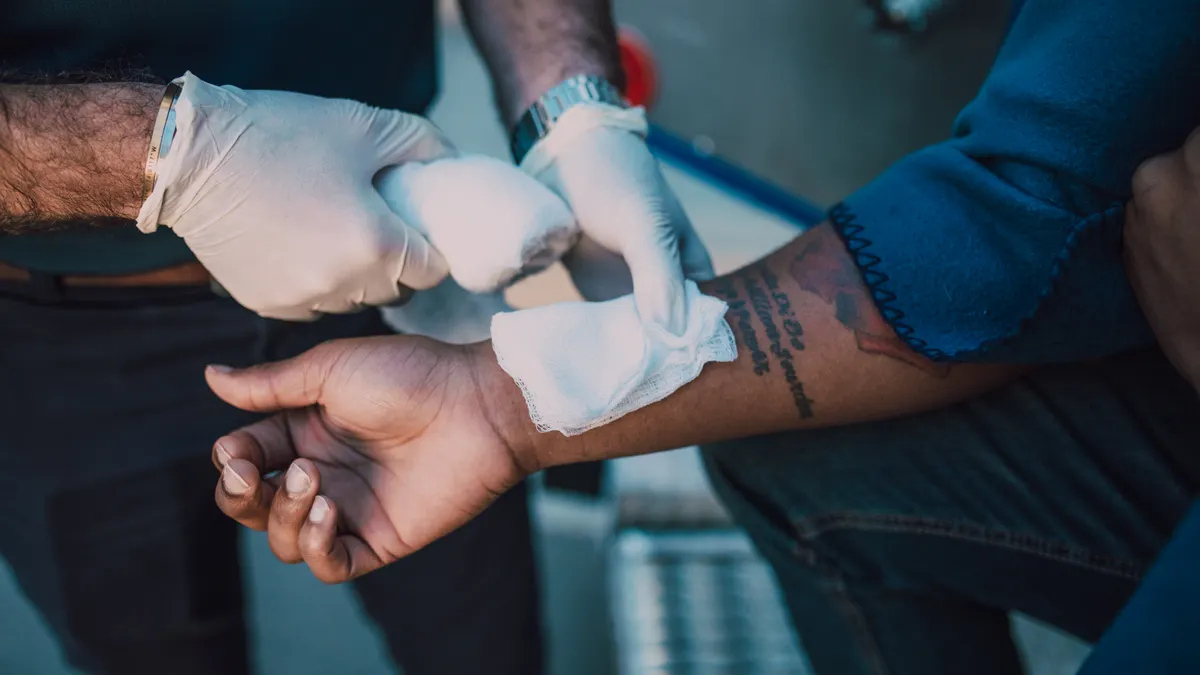
A paw can be bandaged with gauze and vet wrap, but only if the bleeding is controlled enough for the bandage to stay dry for a short ride to the vet. A bad paw wrap can cut off circulation in under an hour, so the goal is protection, not a tight seal.
Here is the basic sequence:
- Place a nonstick layer or gauze directly over the wound. This keeps the wrap from sticking to blood and reopened tissue.
- Wrap the paw with gauze first. Make 2 or 3 passes around the paw and lower leg, keeping it snug but not tight.
- Add vet wrap over the gauze. Vet wrap sticks to itself, not fur, which helps hold the bandage in place.
- Stop before it gets bulky. The wrap should protect the paw, not create a thick boot that changes how the pet walks.
- Check the toes within 10 to 15 minutes. They should stay warm and not swell. If the toes become cold, puffy, or blue, the wrap is too tight and must come off.
Do not wrap a paw so tightly that the toes disappear into a cylinder of fabric. Do not use tape directly on fur. Do not leave a homemade paw bandage on for hours and assume it is fine.
A paw bandage is a temporary bridge to care, not a treatment plan. It is most useful for sliced pads, superficial nail injuries, and bleeding between the toes while you travel. It is the wrong choice if the pet is thrashing, the wound is deep, or blood is still soaking through the layers. In those cases, pressure and transport matter more than a neat wrap, and you should consult a veterinarian.
What to do if the bleeding will not stop
If bleeding will not stop after 10 minutes of firm pressure, treat it as urgent and leave for the vet. Ongoing blood loss means the wound may be too deep, the vessel may be larger than it looks, or the location makes home control unreliable.
Use this threshold: if you have pressed continuously for 10 full minutes and blood is still flowing, not merely spotting, the pet needs professional care. Also leave if the wound:
- reopens every time the pet moves
- is on the face, neck, chest, abdomen, or groin
- is a bite wound or puncture
- is associated with collapse, marked weakness, pale gums, or trouble standing
- has a foreign object stuck in it
Do not remove a stuck object unless a vet tells you to. A knife, glass shard, hook, or stick can be plugging the wound. Pulling it out may turn a limited bleed into a major one. Instead, stabilize the object in place with cloth around it and transport the pet.
If blood is coming from the nose, mouth, rectum, or urine rather than from a visible skin wound, the problem may be internal or may involve a site that cannot be controlled at home. That is not a “wait and see” situation.
The trade-off here is simple: waiting too long may cost more blood loss, while leaving for a vet a little early may feel inconvenient. I would choose the early ride every time once direct pressure has failed. This is not the case for a tiny scrape that stopped oozing after a minute; it is for a bleeding pet wound that keeps winning against pressure.
Safe transport to a vet without reopening the wound
Therefore, transport should keep the wound still, covered, and below the level of chaos. A carrier for cats, a crate for small dogs, or a towel-supported carry for larger dogs reduces jostling far better than letting the pet walk to the car.
Use this transport plan:
- Keep pressure on the wound until the pet is ready to move. If possible, one person presses while another opens the car door or carrier.
- Move the pet low and level. Carry close to the body or use a blanket as a stretcher for larger dogs when the wound is on a leg or body.
- Use a carrier for cats. A cat that is frightened and bleeding should not be loose in a car. A hard-sided carrier is best because it limits twisting.
- Line the carrier or seat with a towel. That absorbs blood and gives traction.
- Keep the trip direct. Stop only if the pet’s breathing changes, the bleeding worsens, or the pet becomes faint.
Do not feed a pet before transport if the wound may need sedation or surgery. Water is less likely to interfere, but if the animal is panicked, even water can be a distraction. Keep the car calm, warm, and quiet.
A muzzle can help with a painful dog during handling, but it must fit safely and never block breathing. Do not muzzle a cat. For cats, a towel wrap is usually safer for short handling than trying to force a muzzle-like restraint.
If the wound is on the chest or abdomen, avoid pressure that makes breathing harder. If the animal cannot lie comfortably on the side opposite the wound, keep the position as neutral as possible and get moving.
Mistakes that make bleeding worse
The biggest mistakes are lifting the cloth too soon, wrapping too tight, and treating active bleeding like a cleaning problem. Each one can turn a manageable wound into a bigger one.
Here is what goes wrong and what to do instead:
- Peeking at the wound every 30 seconds. This breaks clotting. Instead, hold pressure for 5 to 10 uninterrupted minutes.
- Using a loose wrap as the main treatment. Loose wrap shifts and fails. Pressure comes first; wrapping only supports it.
- Wrapping a paw tightly enough to pinch the toes. Tight bandages can impair circulation. Leave room for normal swelling and check the toes within 10 to 15 minutes.
- Pulling off blood-soaked cloth. This strips away the clot. Add more cloth on top.
- Handling a painful pet without restraint. A frightened dog or cat may bite. Use a muzzle for dogs when appropriate, and keep a cat secured in a carrier.
One honest limitation: not every wound should be handled at home beyond first aid. If bleeding is heavy, if the wound is on the head or torso, or if you cannot safely control the pet, home care is the wrong tool. The right move is pressure, restraint, and travel.
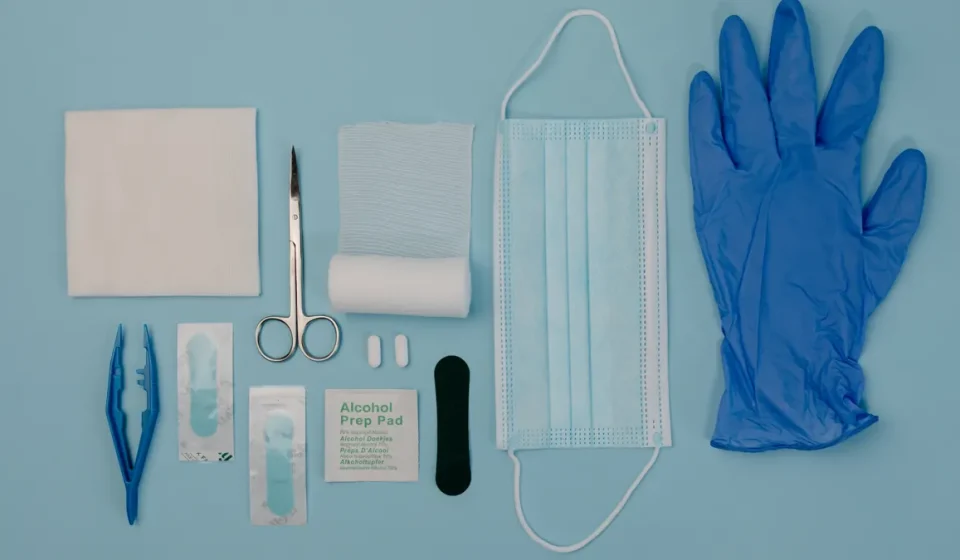
For a home setting, the useful supplies are plain and unglamorous: gauze, a clean cloth, vet wrap, a muzzle for some dogs, and a carrier for cats. That is enough to bridge the gap to veterinary care in many cases. For more on basic first aid supplies, see the ASPCA emergency care guidance and the American Veterinary Medical Association’s pet first aid advice.
What a vet can do that home care cannot
A vet can stop bleeding by finding the source, not just covering the surface. That matters because a skin wound may hide a torn vessel, a deep puncture, or tissue damage that needs sutures, pain control, or both.
Once the pet is in care, treatment may include clipping fur to see the wound, flushing debris, closing tissue with sutures or staples, and controlling pain. If bleeding has been significant, the vet may also check gum color, heart rate, and hydration. Those are not details a home bandage can replace.
This is also where a home first-aid judgment has to stay humble. A wound that seems minor because it is small can still be serious if it is deep, contaminated, or in a place that moves a lot, like the paw, elbow, tail, or inside the thigh. A clean-looking cut can be worse than a messy one because the skin opening is narrow and hides the depth.
The right question is not “Can I make the blood stop for a minute?” The right question is “Can I keep this stable long enough to get professional help?” If the answer is no, the wound has already crossed the line.
For background on emergency first aid in pets, the American Veterinary Medical Association and the ASPCA both publish practical guidance on what to do before reaching a clinic. Those sources are worth keeping in mind, but the decision at the scene is still the same: pressure first, then transport.
How do I stop a pet from bleeding?
You stop a pet from bleeding by applying firm, direct pressure with gauze or a clean cloth for 5 to 10 uninterrupted minutes. Keep the pet still, add more layers if blood soaks through, and do not keep lifting the cloth to check the wound. If bleeding continues, get veterinary help right away.
When is bleeding in a pet an emergency?
Bleeding is an emergency when it does not slow after 10 minutes of firm pressure, comes from a deep wound or bite, or is paired with weakness, collapse, or pale gums. Bleeding from the nose, mouth, rectum, or urine also deserves urgent veterinary attention because the source may be harder to control at home.
Should I bandage a bleeding paw?
Yes, but only as a temporary step after you have controlled the bleeding as much as possible. Use gauze and then vet wrap, keep it snug rather than tight, and check the toes within 10 to 15 minutes for swelling or coldness. If the bandage soaks through or the paw swells, go to a vet immediately.
Drafted with AI; not yet reviewed by a person.