Last updated: November 01, 2026
Key Takeaways
- A pet first aid kit should hold the basics for minor injuries, wound protection, and calmer transport until a veterinarian takes over.
- A pet first aid kit is different because dogs and cats lick wounds, panic under pressure, and react badly to many human products.
- Build the kit in 20 minutes by grouping supplies by task, then storing them in one labeled container you can grab in the dark.
- The right bandages for pets are sterile gauze, non-stick pads, and self-adhering wrap, with scissors to cut them cleanly.
A Pet First Aid Kit Checklist for Dogs and Cats gives you the right supplies before a dog or cat is hurt, trembling, limping, or bleeding. Quick Answer: a practical kit usually needs 12 to 15 items, fits in one container, and should be reachable in under a minute. The point is not to treat everything at home; the point is to have clean, pet-safe supplies on hand before the mess starts, and to consult a veterinarian or veterinary poison source when you are unsure. The ASPCA Animal Poison Control Center and Pet Poison Helpline are authoritative places to check questions about unsafe products.
What should be in a pet first aid kit?
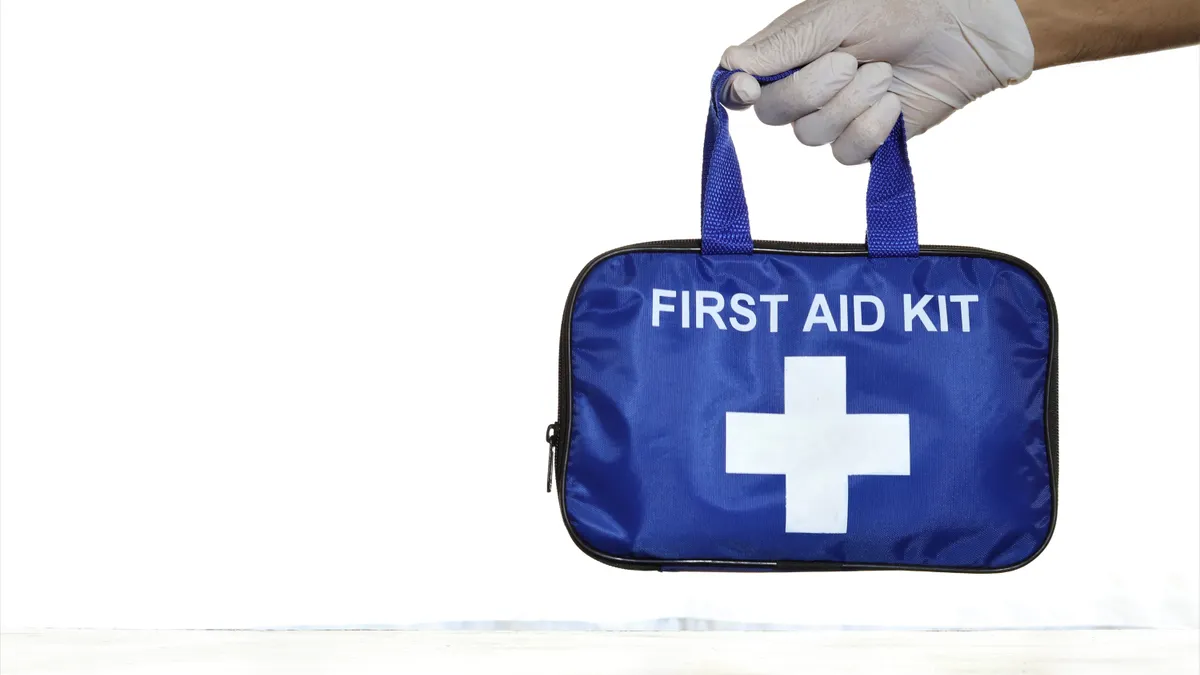
A pet first aid kit should hold the basic supplies needed to control minor problems, protect a wound, and keep your pet calmer until a veterinarian can take over. The kit does not need to be elaborate. It needs the right 12 to 15 items, packed where you can reach them in under a minute.
Start with the items that do the real work:
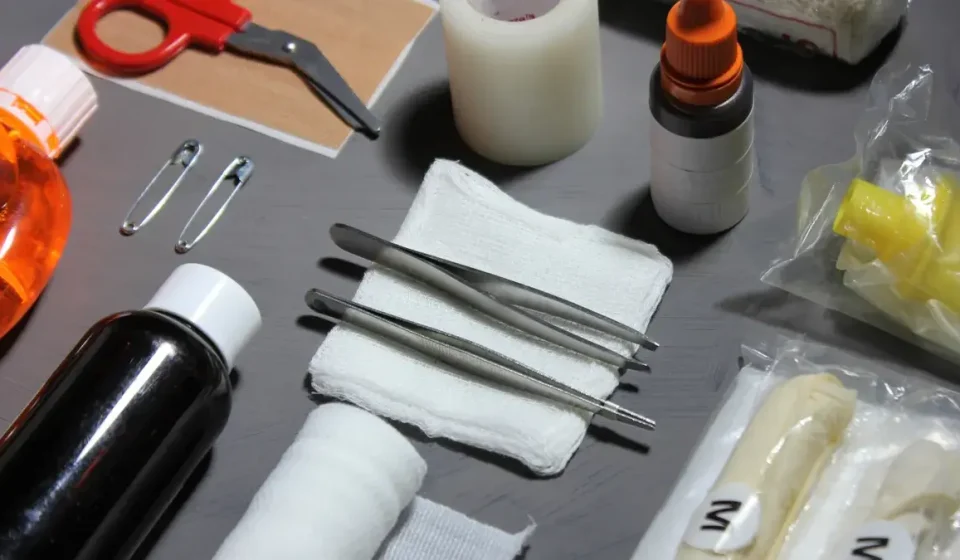
- Sterile gauze pads and gauze roll for covering wounds or adding light pressure
- Non-stick pads so dressings do not cling to fur or a scab
- Self-adhering wrap for holding gauze in place without tape on fur
- Saline solution for rinsing debris from eyes, paws, or skin
- Chlorhexidine as a pet-safe antiseptic when used exactly as labeled and diluted only if the product says to
- Blunt-tip scissors for cutting wrap or fur that has been matted into a bandage
- Tweezers for removing a loose splinter, burr, or thorn
- Styptic powder for small nail bleeds
- Digital thermometer for checking a temperature if your veterinarian has taught you how
- Muzzle sized for your dog or a soft muzzle option for short handling
- Disposable gloves for blood, saliva, and dirty dressings
- Vet contact card with the clinic number and an emergency hospital number
A few extras earn their space if you have room: a towel, extra cotton pads, a flashlight, and a spare leash. A zip pouch or small hard case keeps the contents from scattering in a drawer.
A kit that matches the animal in the home is usually the better choice. A cat owner may want a smaller muzzle option and extra towels. A large-dog household may need a bigger wrap roll and a wider muzzle. A tiny Chihuahua does not need the same sizing as a Labrador, and a long-haired cat needs more gauze and less tape.
For broader planning, this checklist belongs with your household’s pet safety emergencies setup, not as a stand-alone box that nobody can find in a hurry. The American Veterinary Medical Association also recommends keeping emergency contacts and supplies together for faster response.
Why a pet first aid kit is different from a human one
A pet first aid kit is different because dogs and cats lick wounds, panic under pressure, and have skin and mouths that react badly to many human products. That means the kit should be built around restraint, gentle cleaning, and materials that stay put without sticking to fur.
The biggest difference is what is left out. Human ointments, pain relievers, and random antiseptics are not part of a smart pet kit unless a veterinarian has told you otherwise. The same goes for adhesive bandages meant for fingers. They slide off fur, trap moisture, and can be swallowed if a dog worries them loose.
A practical pet kit also needs tools for handling, not just cleaning. A muzzle is a safety item, not a punishment. A frightened animal can bite during a painful moment, even if it is normally sweet. If you keep a muzzle in the kit, size it before there is blood on the floor. A loose fit defeats the point; a too-tight fit makes handling harder.
Another difference is the cleaning supplies. Saline solution is useful because it can rinse dirt without introducing more irritation. Chlorhexidine is useful because it is a familiar veterinary antiseptic, but it still needs label-safe use. That trade-off matters: a stronger product is not automatically a better one, and a home kit is not the place to improvise concentrations.
Choose the kit for the animal you live with, not for a generic pet. A cat kit should emphasize towels, a muzzle that fits feline handling better, and compact storage. A dog kit should emphasize wrap, gauze, and a leash clip or slip lead if your pet tends to bolt when startled. If you travel with your animal in a car, keep a second mini-kit in the vehicle rather than moving the home kit back and forth. The AVMA’s disaster guidance supports keeping supplies where you can reach them quickly.
How do I assemble the kit without buying junk?
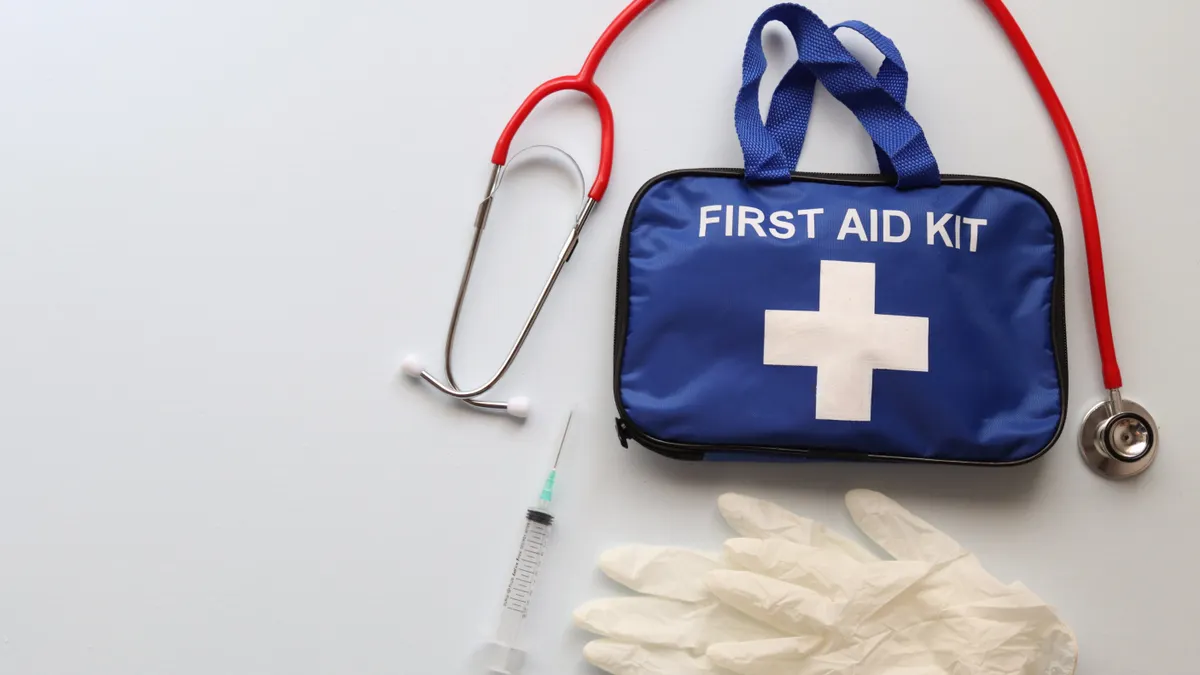
Build the kit in 20 minutes by grouping supplies by task, then storing them in one labeled container you can grab in the dark. The goal is not to buy a veterinary aisle’s worth of gear; it is to buy the few items that cover the most common first-aid jobs.
Use this order:
- Pick one container. A hard plastic box or zippered pouch with a zipper or latch works better than a loose basket. The result should be a kit that closes fully and survives being knocked off a shelf.
- Put the restraint items on top. Add the muzzle, disposable gloves, and a towel first. Those are the items you will reach for before anything else if your pet is frightened or slippery.
- Pack the wound-care layer. Add gauze pads, gauze roll, non-stick pads, self-adhering wrap, and blunt-tip scissors. This gives you the basics for covering and securing a dressing.
- Add cleaning supplies in sealed packaging. Place saline and chlorhexidine where they will not leak onto fabric items. A separate zip bag helps keep the labels readable.
- Include the small-control tools. Put tweezers, styptic powder, and a digital thermometer in a small inner pouch so they do not disappear under the larger items.
- Finish with the paper items. Add your veterinarian’s number, emergency clinic details, and a simple instruction card. In a 2 a.m. rush, that card can matter as much as the scissors.
Then label the outside of the box clearly: Pet First Aid Kit. If you live with more than one pet, write names and any special notes on the inside lid, such as “cat muzzle stored separately” or “larger wrap for the retriever.” A 30-second label now saves 10 confused minutes later.
The main mistake is overfilling the container with gadgets. That costs you space and slows you down. Keep the focus on basic field use, not on specialty tools you may never touch. If the box is too heavy to grab with one hand, trim it. This same rule also helps when you build a Pet First Aid Kit Checklist for Dogs and Cats for travel.
Which bandages for pets belong in the kit?
The right bandages for pets are sterile gauze, non-stick pads, and self-adhering wrap, with scissors to cut them cleanly. Those three items do the job of covering, cushioning, and holding a dressing without sticking tape directly to fur.
Here is the simplest way to think about them:
- Gauze pads absorb seepage and can cover a small area before wrapping
- Non-stick pads protect a wound surface from being torn by a dressing
- Self-adhering wrap holds the layers together and sticks to itself, not to hair
- Gauze roll can add bulk or hold padding in place under the wrap
Buy plain white, sterile versions when possible. Fancy prints are not the point. The kit should be easy to inspect, and you should be able to see if a dressing has soaked through. A blue-print bandage looks cheerful until you are trying to judge blood loss in a dim hallway.
Do not use a stretchy wrap so tightly that it dents a leg or paw. That can cut off circulation. The fit should be snug enough to stay on and loose enough that toes are not squeezed. If the bandage reaches a limb, check that the foot stays warm and that the toes do not swell. If you are unsure, the bandage is probably too tight.
A better habit than reaching for human adhesive tape is to keep self-adhering wrap in the kit. Tape mats hair, creates pain on removal, and may not hold in the same way on a moving animal. Self-adhering wrap is the better choice for a home kit because it grips itself.
The kit does not need a roll of every width. One narrow roll and one medium roll are enough for most homes. Wide wrap is harder to control on a cat and overkill on a small dog. Keep one spare package of gauze pads sealed so the first one stays clean.
What cleaning supplies belong in a pet-safe antiseptic section?
A pet-safe antiseptic section should contain saline, chlorhexidine, and nothing you have not checked against your veterinarian’s guidance or the product label. Those two items handle the most common clean-up tasks in a home kit without turning the box into a chemistry set.
Saline solution is the easiest supply to justify. It is useful for rinsing loose dirt, sand, or debris from around a wound or eye area. Keep a sealed bottle or sterile single-use ampoules if you prefer compact storage. Once opened, most bottle systems are harder to keep sterile, so watch the expiry date and replace them before they look cloudy or dusty.
Chlorhexidine belongs in the kit because it is a standard veterinary antiseptic, but only the correct product belongs there. Some products are ready to use, some are concentrated, and some are not appropriate for every area of the body. The label matters. Do not guess at the dilution, and do not pour an unlabeled cleaner into a spray bottle and call it good. A mislabeled liquid is a bad first-aid item.
This is also where a lot of generic advice goes wrong. People stock hydrogen peroxide, alcohol, scented wipes, or other harsh cleaners because they are common at home. Those choices can sting, delay healing, or irritate tissue. A good kit is selective, not crowded.
Keep this section simple: one bottle of saline, one clearly labeled chlorhexidine product, and the note that both are for basic first aid, not for solving deeper wounds at home. If your veterinarian has a preferred brand or concentration, write it on a card and put the card in the kit. That 3-by-5 note can prevent a mistaken purchase later.
What tools help you handle a scared pet safely?
The most useful handling tools are a muzzle, blunt-tip scissors, tweezers, gloves, and a towel. Those items let you control the scene without wrestling the animal barehanded or improvising with kitchen tools.
A muzzle deserves its own slot even if your pet has never bitten anyone. Pain changes behavior. A dog that would normally tolerate handling may snap when a paw is touched or a nail is bleeding. A properly sized muzzle can protect you long enough to assess the problem and get to a clinic. It is wrong for flat-faced dogs if the model does not fit their anatomy, and it is wrong for any animal if it blocks breathing.
Blunt-tip scissors are safer than pointed scissors around fur, bandage material, and small paws. They can cut tape, wrap, and a matted dressing without as much risk of accidental pokes. Tweezers help with a loose thorn or splinter, but they are not a license to dig. If something is embedded or painful to touch, the kit is not the place to start yanking.
A towel is the quiet workhorse here. It can wrap a cat, cushion a frightened dog, or serve as a barrier while you reach for supplies. Many people skip it because it feels too ordinary. That mistake costs time, and time is the thing you need most during a sudden scare.
Gloves are worth packing even if you never use them in daily life. They keep blood and dirt off your hands, and they keep you from reaching into a wound with bare skin. A pair of nitrile gloves takes almost no room. Add two pairs, not one. The second pair matters if the first tears.
The limitation is simple: these tools help with control, not diagnosis. A kit cannot tell you why your dog is limping or whether a cat’s wound is deeper than it looks. It only makes the first few minutes safer and cleaner.
How should you store and maintain the kit so it is actually ready?
Store the kit where you can grab it in less than 30 seconds, then check it twice a year so expired or missing items do not turn into dead weight. A kit is only useful if the bottles are sealed, the scissors are in place, and the wrap has not been used for a moving box project.
Choose one of three spots: a kitchen cabinet above pet food, a hallway shelf, or a closet near the leash. Avoid the back of a garage or the bottom of a pile of storage bins. Heat and moisture ruin adhesives, weaken packaging, and make labels harder to read. If you keep a second kit in a car, remember that temperature swings can shorten the life of some products.
A twice-yearly check is enough for most homes. Pick the same months every year and make the review part of another household task, such as smoke-alarm testing or replacing winter gear. During the check, look for three things: expired supplies, opened packages, and anything missing from the list. Restock gauze, replace saline, and make sure the muzzle still fits your pet. The CDC’s emergency-preparedness guidance also supports routine checks for supplies.
Keep the kit visible to adults in the house, but out of reach of children and pets. A clear bin works well because you can see what is inside without opening it. If you use a soft pouch, tape the checklist to the inside lid or zipper flap. A visible inventory reduces the chance that the one item you need is missing when the situation is already tense.
If the home has more than one dog or cat, make one kit the main kit and one smaller travel version. The travel kit can be lighter, but it should still include gauze, saline, gloves, self-adhering wrap, and a contact card. A bare-bones kit in the car is better than a perfect one that stays at home. Keep the same Pet First Aid Kit Checklist for Dogs and Cats in both places so restocking stays simple.
What should be in a pet first aid kit?
A pet first aid kit should include gauze, non-stick pads, self-adhering wrap, saline, chlorhexidine, blunt-tip scissors, tweezers, styptic powder, a thermometer, gloves, a towel, and a muzzle. Those items cover the basics of cleaning, wrapping, and handling for dogs and cats.
Drafted with AI; not yet reviewed by a person.